The word for lemon is wrong in almost every European language
Same fruit, same Arabic root – and yet half of Europe says one thing and the other half says something completely different.
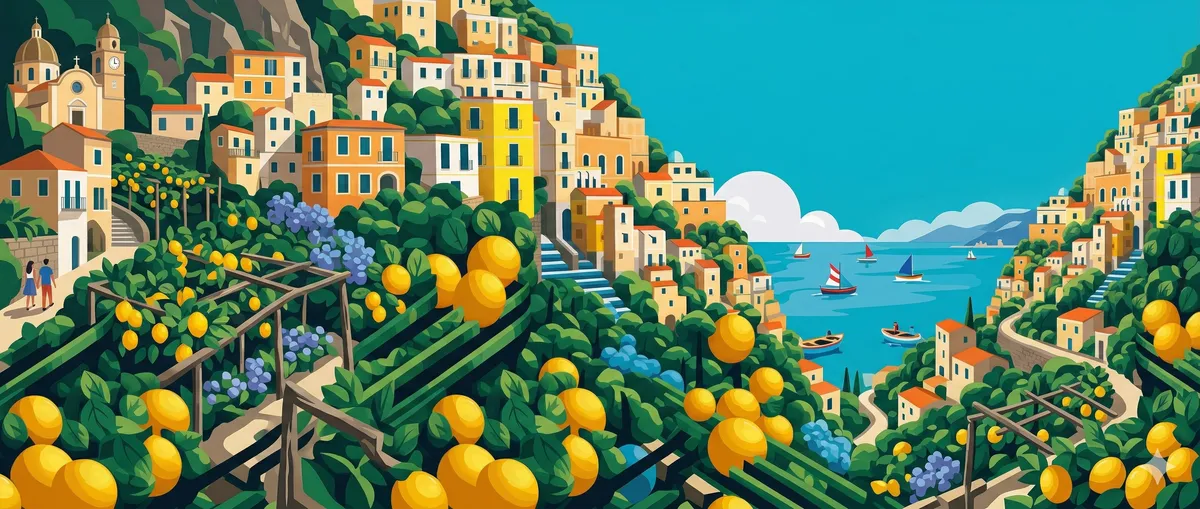
Somewhere around the 12th century, the Arabic word laymūn crossed into Europe. It had already traveled far – from Sanskrit nimbū through Persian līmūn, a generic word for citrus. What happened next is one of the strangest games of telephone in linguistic history.
The split: two paths from one word
But the lemon wasn't the first citrus in Europe. The Romans had already brought the citron – a bigger, bumpy, mostly-pith fruit – from Persia centuries earlier. That's where the Latin word citrus comes from.
Then around the 10th century, Arab traders brought a new fruit: the lemon. It arrived with its Arabic name, laymūn. And here Europe split in two.
The countries on the Arab trade routes adopted the new word. Italian made it limone. Spanish made it limón. Portuguese made it limão. English borrowed it through Old French as lemon.
But France, Germany, and Poland already had the Latin citrus in their vocabulary – from the old citron fruit the Romans had spread. When the lemon showed up, they looked at it and thought: close enough. French called it citron. German made it Zitrone. Polish says cytryna. The original citron fruit? It got demoted to cédrat in French.
So Italy – despite being the heart of the old Roman Empire – took the Arabic word, because the lemon was a genuinely new arrival. And France – despite sitting further from the Arab trade routes – recycled the Latin word, because they saw a fruit that looked like something they already had a name for.
And then there's Greece. The word kédros – the root behind citrus, citron, Zitrone – was born in Ancient Greek. But modern Greeks don't use it. They say lemóni, borrowed from the Arabic. The language that invented the word gave it away and took someone else's instead.
Then lime showed up and ruined everything
The lime arrived in Europe later, and every language had to find a name for it. This is where things got chaotic.
In French, the Arabic-derived limon was already being used, but it had shifted to refer to lime. So French had citron for lemon and calls lime citron vert – literally "green lemon." Meanwhile, the English word "citron" refers to a completely different fruit, which the French call cédrat. Three languages, three different meanings for the same word root.
German kept things cleaner by pulling from both etymological rivers: Zitrone from Latin for lemon, Limette from Arabic for lime. Two different roots for two different fruits. Though Germans also have a third word – Limone – which confusingly looks like it should mean lemon but is used for the small green limes you squeeze into a tequila.
Spanish was straightforward: limón for lemon, lima for lime. Borrowed from two different Arabic words for two different fruits.
Portuguese: where it depends on which ocean you're near
In Portugal, it's simple. Limão is the yellow lemon. Lima is the green lime. Same as Spanish, same logic as English. No confusion.
Then you cross the Atlantic.
In Brazil, limão means lime – the small green fruit you squeeze into your caipirinha. The yellow lemon? Brazilians call it limão siciliano – "Sicilian lime." They don't see it as a separate fruit. It's just a type of limão that happens to be yellow.
And lima? In Brazil that's a third fruit entirely – a sweet, yellow-colored Palestinian lime that Europeans would barely recognize.
So the same word, limão, means lemon in Lisbon and lime in São Paulo. A Portuguese grandmother and a Brazilian bartender would hand you completely different fruits.
The climate theory
There's a pattern hiding here, and it's not about linguistics. It's about weather.
In warmer countries – Brazil, Mexico, most of Central America – limes grow easily and are the everyday citrus. The common fruit gets the short name: limão, limón. The rarer lemon needs a qualifier: limão siciliano, limón amarillo.
In cooler countries – Portugal, Spain, Argentina, Chile – lemons are the default. They get the simple name: limão, limón. Limes are the exotic import, so they get their own word: lima.
The rule: whichever citrus is your everyday fruit, you give it the shortest name. The other one has to explain itself.
The full picture
Every country on this map inherited its word for lemon from one of two ancient trade routes – and the border between them still hasn't moved in seven hundred years.
That's the map for lemon. But the real chaos starts when you add lime to the equation – because several of these languages use the same word for both fruits.
| Language | 🍋 Lemon | 🍋🟩 Lime |
|---|---|---|
| Italian | limone | lime |
| French | citron | citron vert |
| Spanish | limón | lima |
| Portuguese (EU) | limão | lima |
| Portuguese (BR) | limão siciliano | limão |
| German | Zitrone | Limette |
| Greek | lemóni | laim |
Notice the Brazilian row. The everyday word limão means lime there – and what Europeans call a lemon, Brazilians have to specify as limão siciliano. Same word, opposite fruit, depending on which side of the Atlantic you're on.
But it was already confused before it left Arabic
Here's the twist: the word laymūn wasn't even stable in Arabic. In Syria, it means lemon. Cross the border to Lebanon, and the same word means orange. In Morocco, it can mean either. In Tunisia, they don't use it at all – they say qāres. And in Oman and the Gulf, there's a completely separate word – lūmiyy – borrowed not from Persian but from Tamil, through Indian Ocean trade routes.
So the European confusion didn't start at the European border. The word was already fractured within Arabic, pointing at different fruits in different cities, before it ever reached Italy or France.
Seven ways to say the same two fruits. The same root word – laymūn, limón, limone, limão – means "lemon" on one side of a border and "lime" on the other.
And here's the deepest irony: "lemon" and "lime" aren't even different words. Linguists call them doublets – both trace all the way back to the same Sanskrit word nimbū. One traveled through Arabic as laymūn and became "lemon." The other traveled through Arabic as līma and became "lime." Same origin, split into two words, then re-merged, swapped, and confused across every language that borrowed them.
This is the kind of thing you start noticing when you read in another language. Not from a textbook. From the moment a word doesn't quite mean what you expected – and you realize the border you crossed wasn't just geographic.
Learn while you read
Browser extension. Runs locally on your device. Nothing you read leaves your machine.
Join the waitlistFirst in the Invisible Lines series.
→ Part 2: Tea or chai? The one word that tells you which ship got there first.
→ Part 3: Potato or Kartoffel? Europe couldn't agree on what to call it.
→ Part 4: Why half of Europe says loaf when they ask for bread.